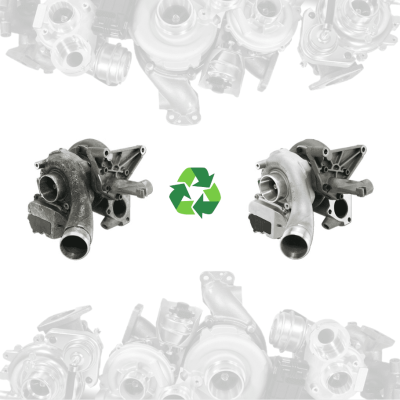
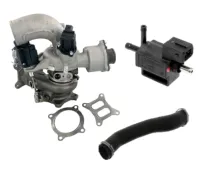
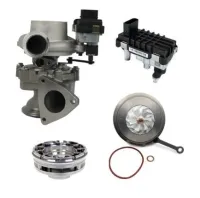

Want more power, but unsure whether your existing turbo is suitable for an upgrade? One option is a Stage 2 or hybrid turbo: modifying an existing turbocharger with a larger compressor wheel and a housing machined to match. To achieve the intended result, engine condition and appropriate engine management calibration also matter.
What actually changes during a turbo upgrade? How does a billet wheel differ from a standard wheel, and why is ECU tuning needed afterwards? This article explains the main points to consider before choosing a Stage 2 turbo.
What is a Stage 2 or hybrid turbo?
A hybrid turbo generally means a turbocharger modified from its standard design using different or upgraded internal components. The aim is to adapt the turbo for greater airflow and the intended engine power output.
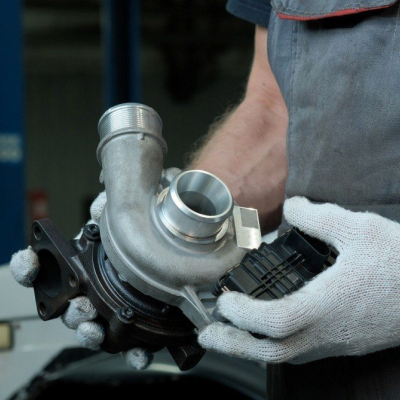
In our NERINGS Stage 2 conversion, we fit a larger billet compressor wheel machined from a solid aluminium blank and bore out the compressor housing to match the new wheel.
Stage 2 is not a universal technical standard. Two turbos with the same label may have different wheel sizes, components and specifications. It is therefore important to understand the actual configuration and whether it suits your engine.
How does a billet wheel differ from a standard wheel?
A standard compressor wheel may be cast, while a billet wheel is machined from a solid aluminium blank on a CNC machine. Milling allows the hub and blade shapes to be formed precisely.

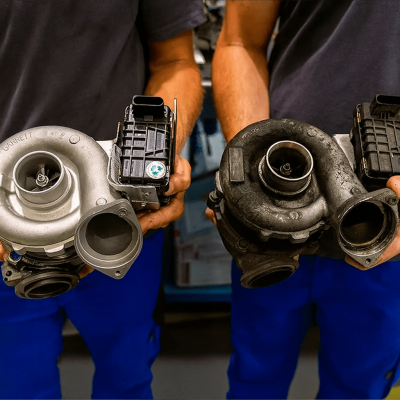
A billet wheel often looks shinier and has visible machining marks. However, the manufacturing method alone does not guarantee a power increase. Wheel size, blade shape and compatibility with the rest of the turbo determine the result.
Standard turbos may also have factory-fitted machined compressor wheels. When comparing upgrades, consider the complete turbo specification rather than the “billet” label alone.
Why does the compressor housing need machining?
A larger compressor wheel needs a matching internal housing profile and precise clearances. During the upgrade, we machine the aluminium compressor housing — the turbo’s cold side — to suit the new wheel.
Not every housing can accommodate every wheel size. Before starting, we assess design limits, component condition and compatibility. After replacing the necessary parts, we balance, adjust and test the unit as required for the turbo type.
How much additional power can you expect?
Greater airflow creates the potential for more engine power, but the turbo is only one part of the setup. The final result depends on:
- the engine’s mechanical condition;
- the fuel system’s capacity;
- the intake, cooling and exhaust systems;
- the engine control unit calibration;
- other supporting modifications.
An indicative gain with a suitable setup may be 30–60 PS (metric hp). This is not a guaranteed result for every car. We assess the upgrade options and expected outcome individually.
Example: BMW 325d — turbo 758352
One NERINGS upgrade example compares the standard and Stage 2 hybrid turbo for BMW 325d applications. We confirm compatibility for the individual car using the turbo part number.

In this example, the upgrade together with suitable ECU calibration may deliver approximately 40–60 bhp of additional power. The final result depends on the calibration, engine condition and supporting modifications. This is an indicative gain, rather than a guarantee.
Why is ECU tuning needed after the upgrade?
To use the upgraded turbo’s greater airflow potential and achieve the intended power increase, you need appropriate engine control unit (ECU) remapping. This is commonly known as chip tuning.
Simply fitting a larger turbo does not mean the existing engine management calibration will automatically use its potential. Boost pressure and fuel delivery need to be matched to the turbo and the vehicle’s setup.
NERINGS can also help with your car’s ECU remapping, matching the calibration to the upgraded turbo. The scope and costs of the turbo upgrade and tuning are agreed individually.
Can you upgrade my existing turbo?
We can upgrade your own turbo or supply an upgraded unit from our stock, subject to availability for your model. The most suitable option depends on the turbo’s design and condition.
If a turbo has already been upgraded but needs repair, we first inspect its actual configuration and damage. Details of previously fitted components and wheel dimensions help us assess the repair options more accurately.
An upgrade or repair usually takes 1–2 working days. We confirm the exact turnaround when preparing your offer.
What do you need to quote a price?
For an initial offer, all we need is the turbo part number or a photo of its identification plate. If you have a target power output or your car already has other modifications, tell us about those too.
This information helps us assess the most suitable upgrade. We confirm the final scope of work and price after inspecting the turbo.
Find out more about upgrading your turbo
Visit the NERINGS Stage 2 turbo upgrade and repair page for more information. To receive an individual offer, send us your turbo part number or a photo of its identification plate.
Phone:
+371 20 209 448
Email:
[email protected]